

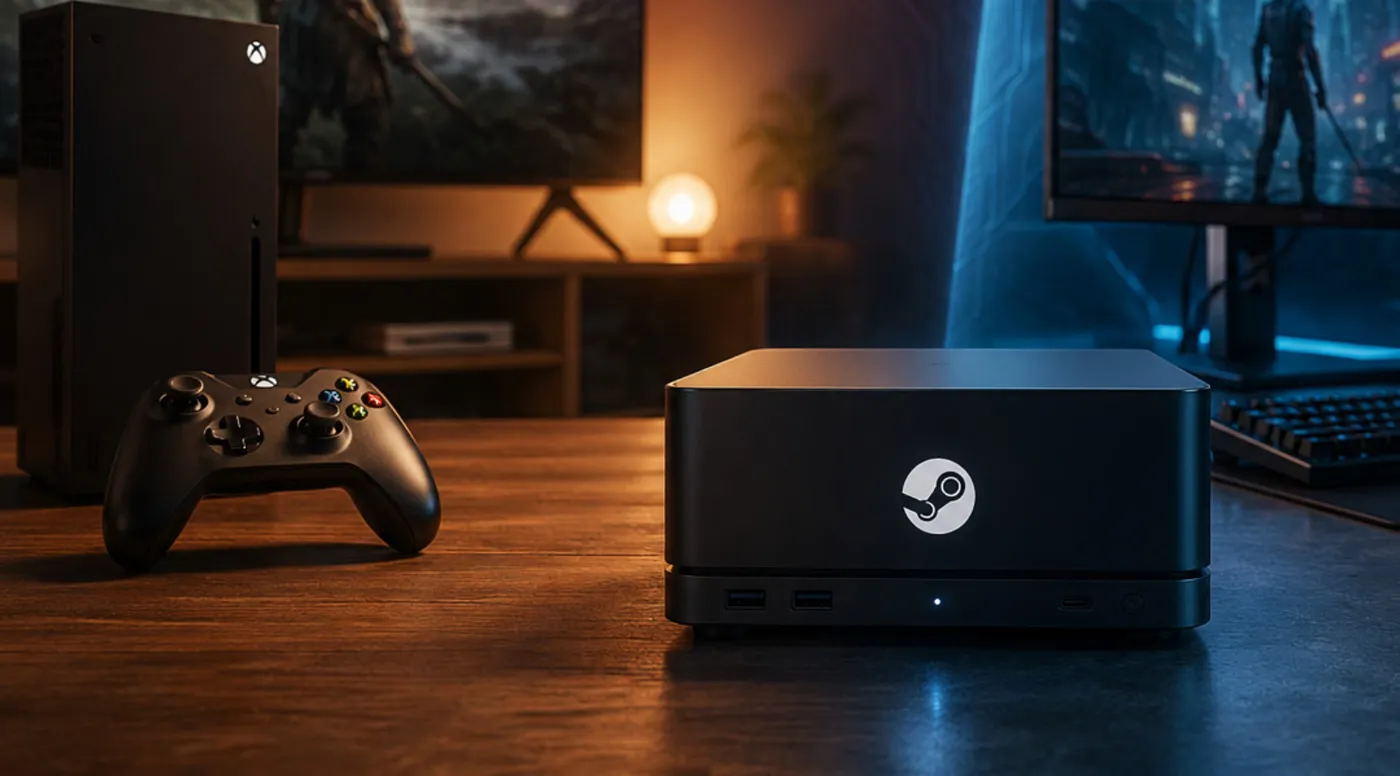
We’re slowly watching consoles turn into premium products while PC becomes the default gaming platform.
Valve has officially revealed Steam Machine pricing, with the base 512GB model starting at €1,039. The announcement has sparked major discussion online, especially because the device costs more than a PlayStation 5 Pro.
Many gamers have reacted negatively to the pricing, arguing that it puts the Steam Machine out of reach for what is essentially a living-room gaming device. While some understand the hardware costs and positioning, others feel the entry price is too high compared to traditional consoles and even pre-built gaming PCs.
If you’ve been following the latest buzz in gaming, this is quite striking. A growing share of developers is shifting toward PC-first development, with increasing attention on SteamOS. This shift highlights where the industry may be heading next. Meanwhile, Valve is positioning the Steam Machine as a 2026 living-room PC alternative, as the wider gaming market continues to lean more toward PC and cloud-based ecosystems.
The big shift toward PC and SteamOS
A new survey has just been released about what game makers are developing for. According to recent developer surveys, the focus is mainly on Windows PC, with growing interest in SteamOS, while only 20% plan to make something for Xbox. PlayStation and Switch are somewhere in between. That is actually quite surprising. It shows that traditional consoles are far from being the preferred place to build games anymore.
Why is this happening? Well, on PC it’s easy to test and ship builds, and platforms like Steam make it simple to reach a large audience. On top of that, there are more and more useful tools that make life easier for developers.


- SteamOS is making Linux gaming increasingly accessible.
- Safe and open platforms attract creators.
What exactly is the Steam Machine?
You may have already heard about Valve's new Steam Machine. It is a compact PC-like gaming device that runs SteamOS and is designed for living-room gaming on a television.
Valve does not call it a traditional console. It is more like a living room PC. You can play Steam games on it, it runs SteamOS, but you can also install other Linux-based operating systems if you want. That makes it more flexible than an Xbox or PlayStation.


What is also interesting: Valve says the hardware is powerful enough to handle around 4K gaming, much stronger than the handheld Steam Deck. Pricing has now been revealed, with the base 512GB model starting at €1,039. While the hardware offers more flexibility than a traditional console, the price has become one of the most debated aspects of the Steam Machine announcement.
SteamOS is growing, little by little
You may not hear about SteamOS every day, but this operating system is the quiet force behind Valve’s hardware. It is Linux-based and recently more devices have started supporting SteamOS. For example, Lenovo is releasing SteamOS devices and other handhelds are running it as well.
This does not mean SteamOS is about to dethrone Windows. No, that will not happen overnight. But it does mean that gaming is no longer only about Windows. SteamOS makes gaming more open and flexible, reducing dependency on traditional platforms.
Steam Machine pricing sparks debate online
Valve has officially revealed both the specifications and pricing of the Steam Machine, and the announcement has generated a lot of discussion online. While many gamers expected a premium device, few expected it to cost more than a PlayStation 5 Pro.
This pricing effectively positions the Steam Machine closer to a high-end gaming PC than a traditional console, which is why the reaction online has been so strong.
- Steam Machine 512GB: €1,039
- Steam Machine 512GB + Controller: €1,108
- Steam Machine 2TB: €1,359
- Steam Machine 2TB + Controller: €1,428
Many gamers are excited about the idea of a living-room gaming PC powered by SteamOS, but others argue that the entry price is difficult to justify, especially since the base model only includes 512GB of storage.
Steam Machine specifications
Valve has also revealed the full hardware specifications of the Steam Machine. The device is designed as a compact gaming PC running SteamOS 3 and intended for use on a television, similar to a traditional console.
- Semi-custom AMD Zen 4 processor (6 cores / 12 threads)
- Semi-custom AMD RDNA 3 graphics with 28 Compute Units
- 16GB DDR5 memory
- 8GB GDDR6 VRAM
- 512GB or 2TB NVMe SSD storage
- microSD card slot
- Wi-Fi 6E
- Bluetooth 5.3
- Gigabit Ethernet
- Integrated Steam Controller wireless adapter
- SteamOS 3
- Compact form factor (approximately a 6-inch cube)
Steam Machine waitlist explained
Valve is not selling the Steam Machine through a traditional first-come, first-served launch. Instead, interested buyers can join a waitlist until June 25.
Once the registration period closes, Valve will randomize the entire list and send emails to participants with the results.
This effectively turns the launch into a lottery system rather than a queue.
For example, I joined the 512GB waitlist myself:
The system is likely intended to reduce scalping and make the launch process fairer for buyers.
And Xbox? What is happening there?
While the PC and Steam side of gaming is growing, things are not going perfectly for Xbox. According to several market analyses, Xbox is seeing a decline in hardware sales.


Meanwhile, Microsoft is trying to adapt. There is talk about an Xbox that behaves more like a PC, with Windows and backwards compatibility, and a stronger focus on cloud gaming and PC integration. That makes a lot of sense considering where developers are heading.
Xbox Helix: the next step?
Unlike the Steam Machine, which has now been officially revealed by Valve, Project Helix remains the subject of industry rumors and speculation.
There are increasing rumors that Microsoft is working on a new generation Xbox under the codename “Project Helix”.
According to these reports, Helix would not be a classic console anymore, but rather a hybrid system that further blurs the line between console and PC.
- A design more like a PC with an Xbox interface
- Deep Windows integration
- Combination of cloud gaming and local performance
- Full backwards compatibility with older Xbox games
If this direction is correct, Xbox Helix would be less about a traditional console war and more about a flexible gaming ecosystem that combines both PC and console gaming.
Microsoft has not officially confirmed this, but it does fit within the company’s broader strategy: more focus on platforms and less on closed hardware ecosystems.
What does this mean for you?
As a gamer, this is quite exciting, but also a bit strange. You no longer really have to choose between “PC or console” like before. It now feels more like:
- If you want maximum control and open systems, PC or SteamOS is ideal.
- If you want convenience and a plug-and-play experience, consoles are still relevant.
- If you want big-screen gaming without a full PC, the Steam Machine offers a nice middle ground.
Trends to watch
- More developers choosing PC over consoles.
- The Steam Machine entering the market as a premium SteamOS-powered gaming device.
- SteamOS growing thanks to broader support.
- Xbox searching for its new place between PC and cloud.
The entire landscape is changing. And if you invest in a PC setup now, you might have an advantage if this trend continues.
In the end, gaming feels like it is becoming more open, more flexible, and a bit crazier. And that is exactly why so many gamers fell in love with this hobby in the first place.
So yeah. Grab a coffee, relax, and enjoy what is coming next.
For official info about the new Steam Machine, you can check the Steam store page: Steam Machine – official Steam page (here you will find all current details and any updates about release, specs, and availability).

Webmastahhh is the creator of Mastanet, a gaming and technology website where he shares news, reviews, guides and personal insights about games, hardware, software and the future of digital entertainment.










 You may also like



 0
0


