

Pong (1973) – The Birth of Arcade Gaming
Introduction
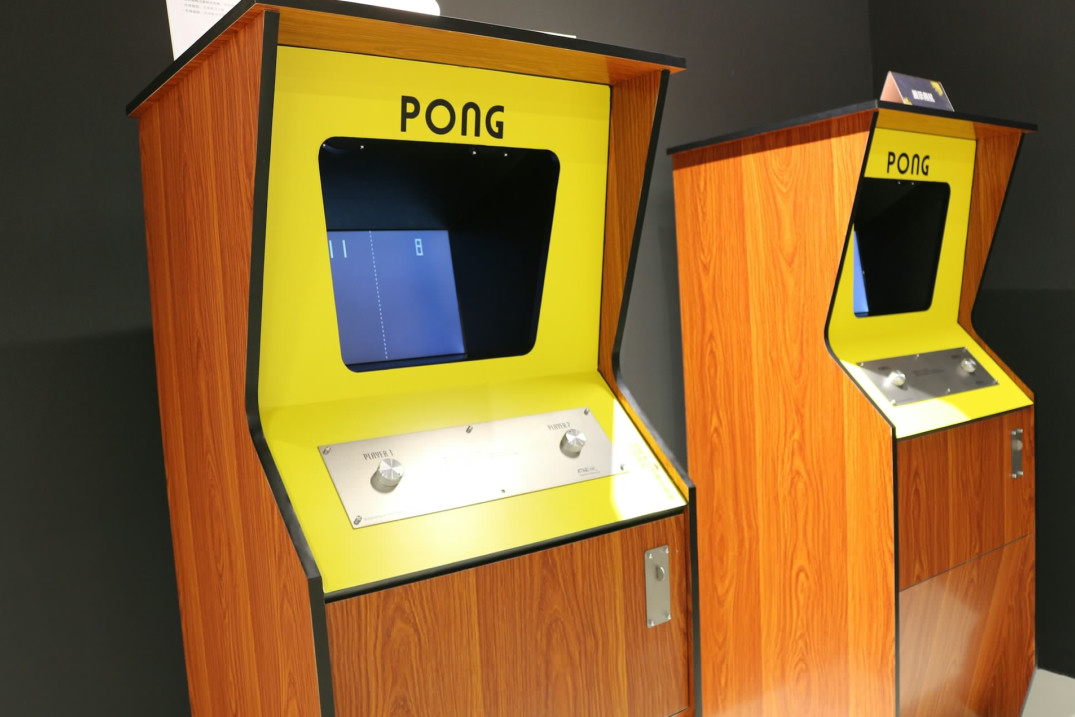
Released by Atari in 1973, Pong is often described as one of the most important video games ever created. While it may look extremely simple by today’s standards, its impact on the gaming industry was anything but small. It was one of the first games to prove that video games could work as a commercial product outside of research labs and niche environments.
The game itself was inspired by table tennis, featuring two paddles and a ball that players would bounce back and forth. There were no complex mechanics, no story, and no advanced graphics. Yet despite its simplicity, Pong managed to capture attention in a way few other early experiments in gaming ever did.
The Rise of Arcade Gaming
Before Pong, video games were mostly experimental projects. They existed in universities, research centers, or limited prototypes. Pong changed that by bringing the concept into public spaces. When Atari placed arcade cabinets in bars and entertainment venues, something unexpected happened: people actually lined up to play it.
This moment marked the beginning of the arcade era. For the first time, gaming was not just something you did on a lab computer or a niche system—it became a social activity. Players would compete for points, take turns, and watch each other play. This created a new kind of entertainment culture that didn’t exist before.
Why Pong Became So Popular
Part of Pong’s success comes from its simplicity. Anyone could understand it within seconds. There were no instructions needed, no learning curve, and no barriers to entry. You simply moved a paddle up and down and tried to return the ball.
This accessibility made it appealing to a wide audience, including people who had never played a video game before. In a way, Pong was one of the first “casual” games ever made, long before the term existed.
Another important factor was competition. Even though the game was simple, players quickly became competitive. High scores and winning streaks started to matter, creating a natural motivation loop that kept people playing longer than expected.
Impact on the Gaming Industry
The success of Pong had a ripple effect across the entire entertainment industry. It proved that video games were not just a passing experiment but a viable business model. This encouraged other developers and companies to explore similar ideas, leading to a rapid growth of arcade machines in the years that followed.
Atari, the company behind Pong, became one of the most influential names in early gaming. The success of the game also inspired countless clones and variations, as other companies rushed to capitalize on the new market.
More importantly, Pong helped establish the foundation for competitive gaming. The idea of scoring points, beating opponents, and improving performance became central to almost every video game that followed.
Cultural Legacy
Even decades after its release, Pong remains a recognizable symbol of gaming history. It is often referenced in documentaries, museums, and retrospectives about video games. While it may not offer the depth or complexity of modern titles, its importance lies in what it represented: the beginning of an entire industry.
Many modern game designers still look back at Pong as an example of how simple mechanics can create engaging gameplay. It shows that innovation does not always require complexity—sometimes, the simplest ideas are the most powerful.
Conclusion
Pong is more than just an early video game. It is a milestone that marked the transition of gaming from experimental technology to mainstream entertainment. Without Pong, it is difficult to imagine the arcade boom of the late 1970s or the home console revolution that followed.
It may look primitive today, but its influence is still visible in almost every game that exists now. Pong didn’t just start a trend—it started an industry.
More about Pong: Wikipedia – Pong


