

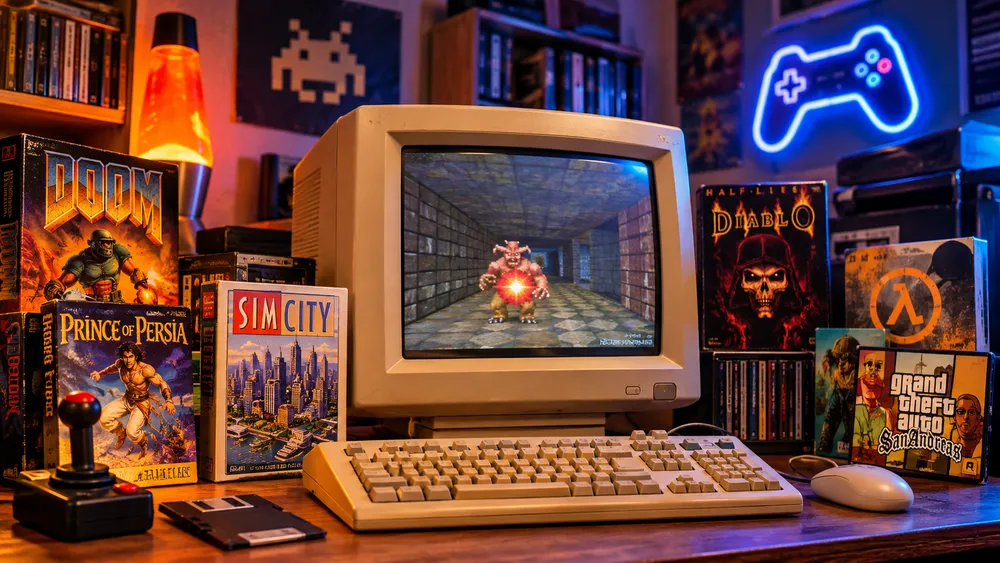
Before enormous open worlds, realistic graphics and online gaming communities, PC games were already creating unforgettable experiences, from simple DOS adventures to legendary shooters and massive role-playing games. The 1980s, 1990s and early 2000s helped shape PC gaming, giving us some of the most influential and memorable games in gaming history.
Some of these games introduced ideas that are still used today. Others became famous for their atmosphere, challenging gameplay or unforgettable characters. And while technology has changed enormously, many classic PC games are still surprisingly enjoyable.
Whether you grew up playing these games or are discovering them for the first time, let's take a nostalgic journey through three decades of PC gaming history.


The 1980s: When PC Gaming Found Its Identity
During the 1980s, home computers became increasingly popular. Systems such as the Commodore 64, Apple II and IBM-compatible PCs gave developers new opportunities to experiment with graphics, sound and gameplay.
Compared with modern games, many early titles were relatively simple. However, technical limitations encouraged developers to focus on clever mechanics, exploration and creativity. Players could build cities, solve puzzles, explore mysterious worlds or test their reflexes in challenging platform games.
Building Cities and Exploring New Worlds
One of the most influential releases of the decade was SimCity (1989). Instead of following a traditional story, players were given the freedom to create and manage their own cities. Roads, residential areas, industrial zones and public services all played a role in keeping a growing city running.
Another memorable release was Prince of Persia (1989). Its fluid character animations, carefully designed platforming sections and deadly traps made it stand out. Precision and timing were essential, and even a small mistake could mean starting a difficult section all over again.
 SimCity helped establish the city-building genre.
 Prince of Persia demonstrated how fluid animation could improve platform games.
 Developers started exploring ideas beyond traditional arcade gameplay.
The 1990s: The Golden Age of PC Gaming
If the 1980s established the foundations, the 1990s were when PC gaming truly began to take off. Computers became more powerful, CD-ROM drives became increasingly common and developers started creating larger worlds with more detailed graphics, music and storytelling.
This decade introduced some of the most recognisable names in gaming history. First-person shooters, real-time strategy games, point-and-click adventures and role-playing games all became major parts of the PC gaming landscape.
DOOM, Myst and Diablo: Three Games That Changed Everything
Released in 1993, DOOM quickly became a favourite among PC gamers. Its fast-paced combat, creepy corridors and aggressive enemies made it an experience unlike most games at the time. And for players who wanted more, custom maps and multiplayer matches offered plenty of reasons to keep coming back.
Not every successful PC game needed explosions or fast-paced action. Myst (1993) offered something completely different: a mysterious island filled with puzzles, strange machinery and hidden secrets. Its atmospheric presentation demonstrated that exploration and storytelling could be just as compelling as action.
In 1996, Diablo introduced players to a dark fantasy world filled with dangerous dungeons, monsters and valuable loot. Its addictive combination of combat, character progression and equipment collection helped define the action RPG genre.


More 1990s Classics Worth Remembering
The three games above were only part of a much bigger gaming revolution. The 1990s produced an incredible number of memorable PC releases, covering almost every genre imaginable.
 Duke Nukem 3D (1996) - Fast-paced shooting and plenty of attitude.
 Quake (1996) - A major milestone for 3D shooters and multiplayer gaming.
... and discover even more classic PC games

 Warcraft II (1995) - Real-time strategy
 The Secret of Monkey Island (1990) - Point-and-click adventure
 X-COM: UFO Defense (1994) - Tactical strategy
 Baldur's Gate (1998) - Fantasy RPG
 Half-Life (1998) - Story-driven FPS
 Carmageddon (1997) - Destruction racing
 Unreal Tournament (1999) - Arena shooter
 StarCraft (1998) - Competitive real-time strategy
 Heroes of Might and Magic III (1999) - Turn-based strategy
LAN Parties: Gaming Together in the Same Room
The 1990s also helped establish multiplayer gaming as an important part of PC culture. Before online gaming became as accessible as it is today, players often connected their computers through local area networks, better known as LANs.
Friends brought their computers together, connected them through a network and spent hours playing shooters and strategy games. These gatherings became known as LAN parties and often involved an entire weekend of gaming, snacks and very little sleep.

For many gamers, these events were just as memorable as the games themselves. They were about competition, teamwork and sharing the excitement of discovering something new.
The Early 2000s: Bigger Worlds and New Possibilities
By the early 2000s, PC hardware had advanced considerably. Faster processors, more powerful graphics cards and improved internet connections allowed developers to create games that would have been difficult to imagine only a decade earlier.
Games became more cinematic, environments became larger and online multiplayer started becoming a much bigger part of the experience.
New Generations of Shooters and Open Worlds
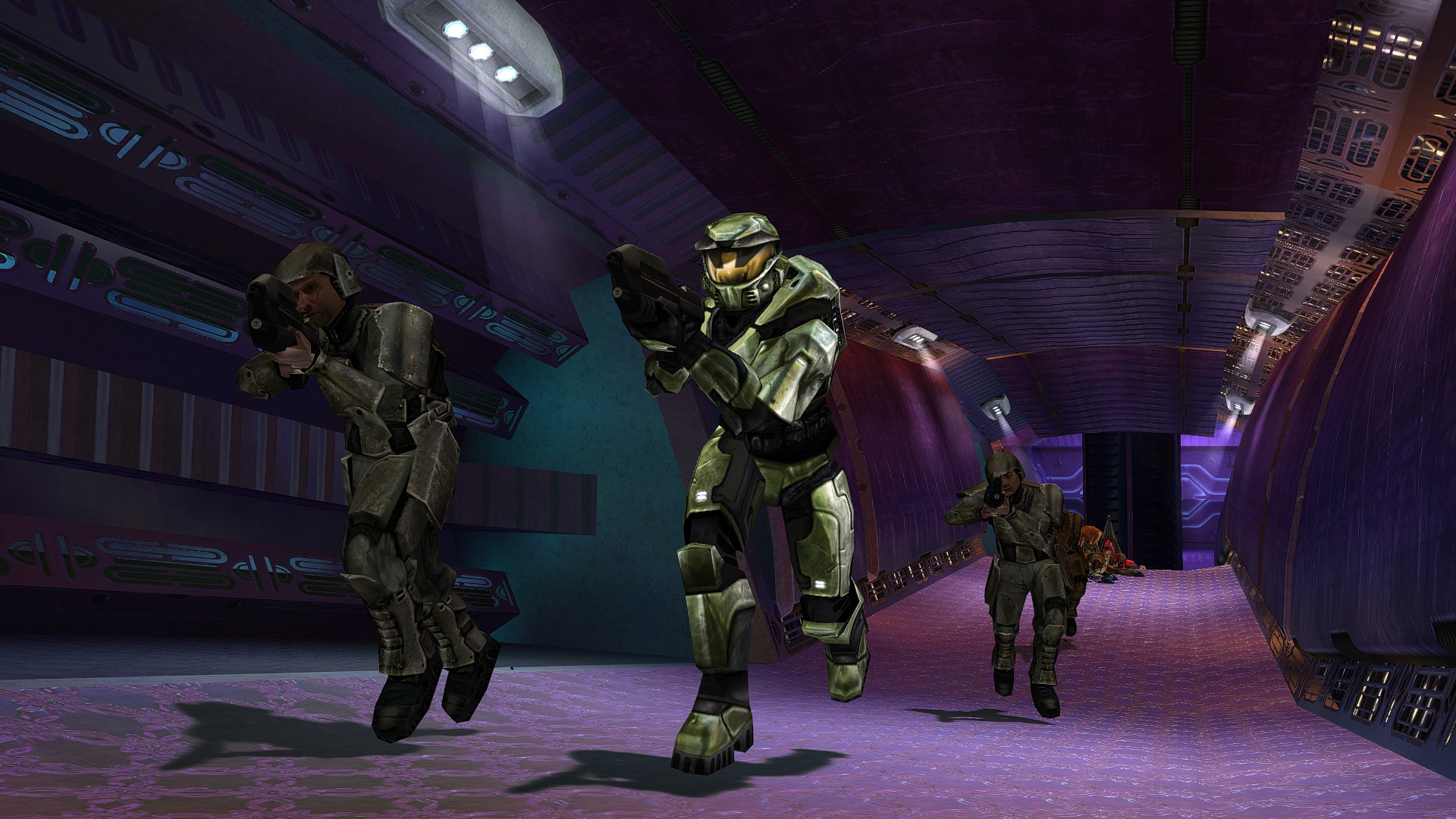
The early 2000s were an exciting time for first-person shooters. Halo: Combat Evolved originally launched in 2001 on Xbox, with its PC release arriving in 2003. It helped bring a new style of science-fiction shooting to a much wider audience.
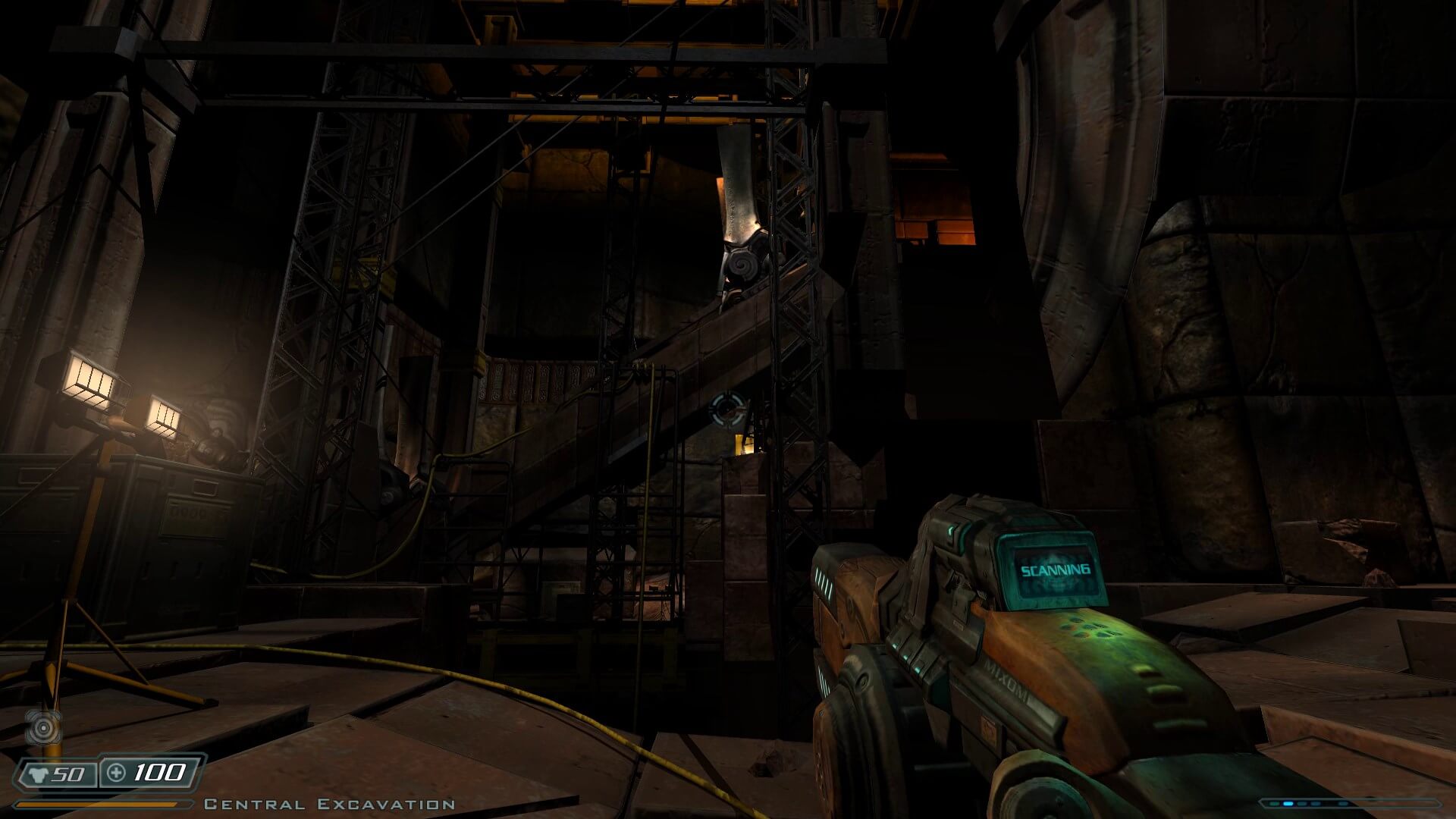
In 2004, Doom 3 took the legendary franchise in a darker direction. Instead of focusing primarily on fast-paced action, it emphasised atmosphere, shadows and horror. It offered a very different experience from the original DOOM.
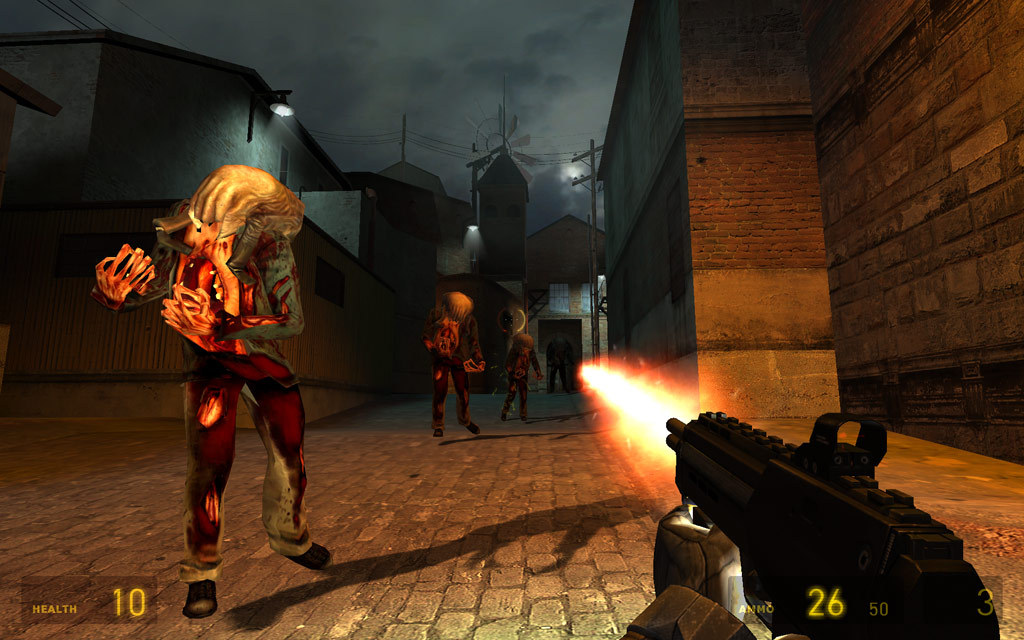
Then came Half-Life 2 (2004), which raised the bar for storytelling and physics in PC gaming. Its believable environments and impressive physics system helped create a world that felt more alive than many games before it. The Gravity Gun quickly became one of its most memorable features.
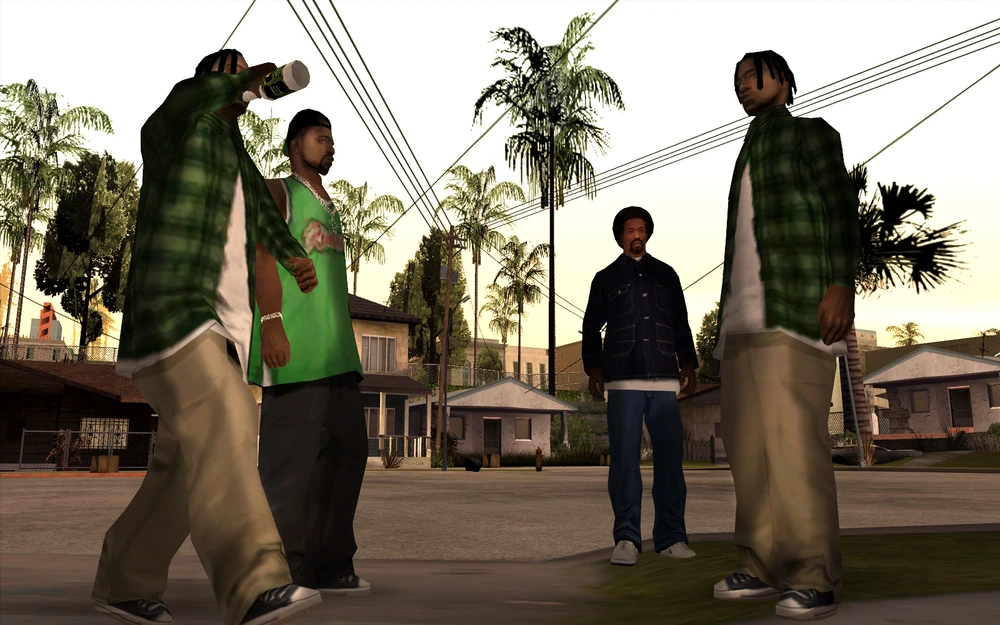
Grand Theft Auto: San Andreas and the Freedom of Open Worlds
Grand Theft Auto: San Andreas first arrived on PlayStation 2 in 2004, with the PC version following in 2005. Its enormous world offered cities, countryside, missions and countless optional activities.
Players were not constantly pushed towards the next objective. You could follow the story, explore the map, customise vehicles, visit different locations or simply discover what the game had to offer.
San Andreas demonstrated just how much freedom an open-world game could provide. Even today, its world and memorable characters remain a big part of gaming nostalgia.
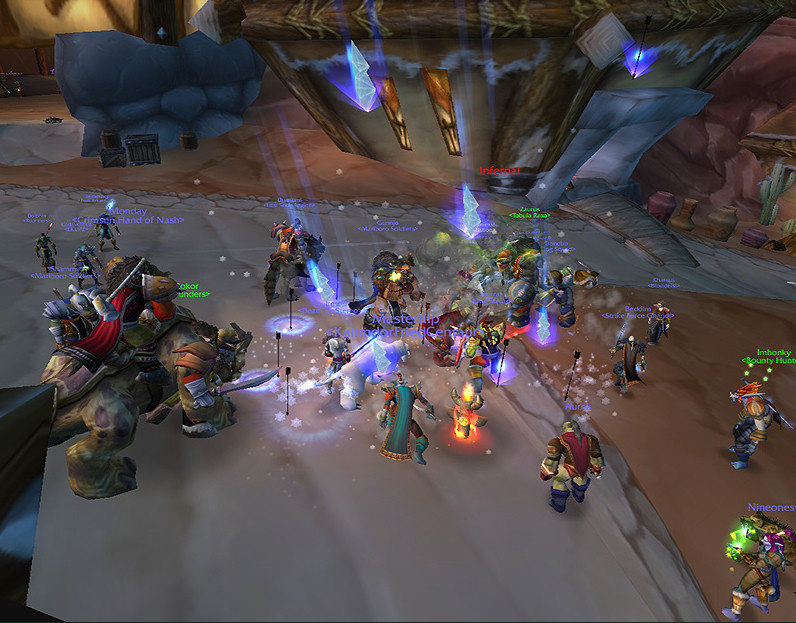
World of Warcraft Changed Online Gaming
Another landmark release arrived in 2004 with World of Warcraft. Blizzard's MMORPG brought players into a shared fantasy world where they could explore, complete quests, form groups and take part in large-scale adventures.
Guilds, raids, character progression and social interaction became familiar concepts to millions of players. For many gamers, World of Warcraft was not simply a game. It became a place to meet friends and spend countless hours exploring Azeroth.

PC Gaming Culture: LAN Parties and Custom Computers
The early 2000s were also a great time for PC enthusiasts. Building and upgrading your own computer became an important part of the hobby. Players experimented with cooling, lighting and custom cases to create machines that reflected their personalities.
LAN parties continued to bring gamers together, while online communities and forums made it easier to share hardware advice, modifications and gaming experiences.


Why Classic PC Games Are Still Worth Playing
Modern games offer impressive graphics, enormous worlds and increasingly sophisticated technology. But that does not mean older PC games have lost their appeal.
Many classics remain enjoyable because their strongest qualities were never dependent on cutting-edge hardware. Good level design, interesting gameplay mechanics and memorable atmosphere can stand the test of time.
 Why Retro Games Are Still Popular
 Many classics focus on gameplay rather than endless progression systems.
- No enormous downloads or constant updates for many older titles.
- No battle passes or modern live-service distractions.
- Unique mechanics and creative ideas that still feel fresh.
- A great way to experience gaming history firsthand.
- Many games can run on relatively modest computers.
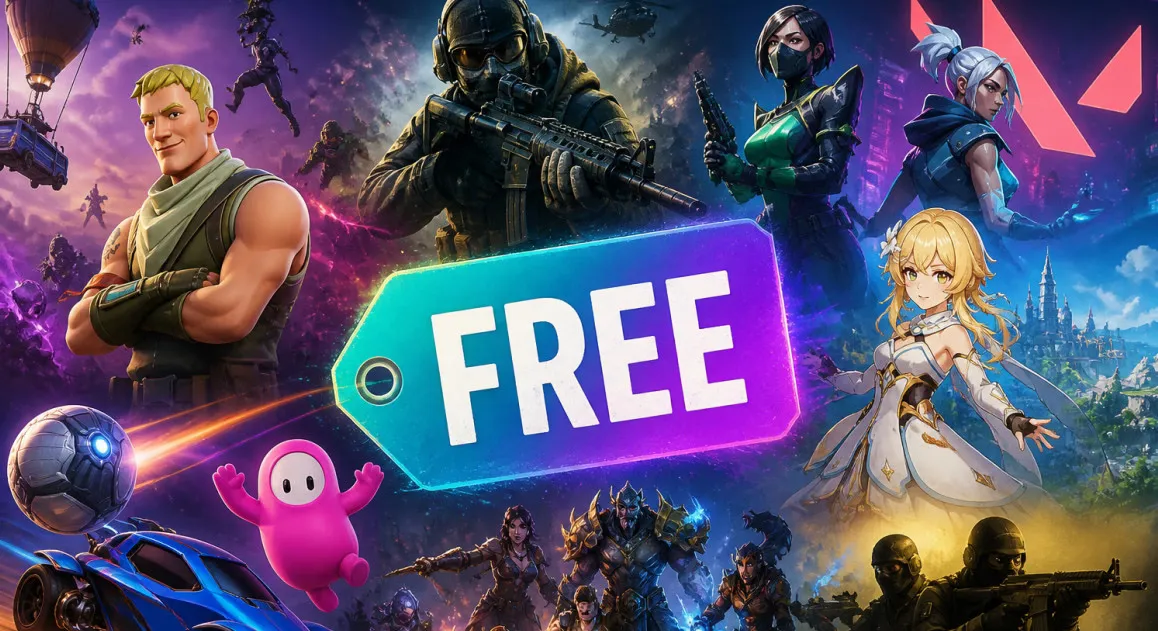
 Play Classic Games Without an Expensive Gaming PC
Fun Facts About Classic PC Gaming
 DOOM helped shape PC gaming culture through its modding scene and influential multiplayer modes.
 LAN parties were the social networks of their time, bringing gamers together to play multiplayer games in the same room.
 Counter-Strike started as a Half-Life mod before becoming one of the most influential competitive shooters ever made.
 Some popular games and experiences started as community-made mods.
 StarCraft became hugely popular in South Korea, where professional gaming tournaments helped turn it into a competitive phenomenon.
Three Decades That Helped Shape PC Gaming
The 1980s, 1990s and early 2000s were incredibly important for PC gaming.
The 1980s established the foundations. The 1990s brought groundbreaking shooters, strategy games and adventures. The early 2000s expanded those ideas with larger worlds, advanced physics, cinematic storytelling and online experiences that connected players around the world.
Not every classic has aged perfectly, and some games can feel challenging by modern standards. But the creativity behind many of these releases is still easy to appreciate.
Whether you grew up playing these games or are discovering them for the first time, classic PC gaming offers a fascinating look at how far the industry has come.
And sometimes, going back to an older game is a good reminder that great gameplay never really gets old.
Image Credits
"Mittelgrosse LAN-party" available under
CC BY-SA 3.0 -
via Wikimedia Commons.
"LAN party" by Knacker, available under
CC BY-SA 3.0 -
via Wikimedia Commons.
 Dates are approximate and based on the hardware, trends and context of each period.

Webmastahhh is the creator of Mastanet, a gaming and technology website where he shares news, reviews, guides and personal insights about games, hardware, software and the future of digital entertainment.










 You may also like


 0


