

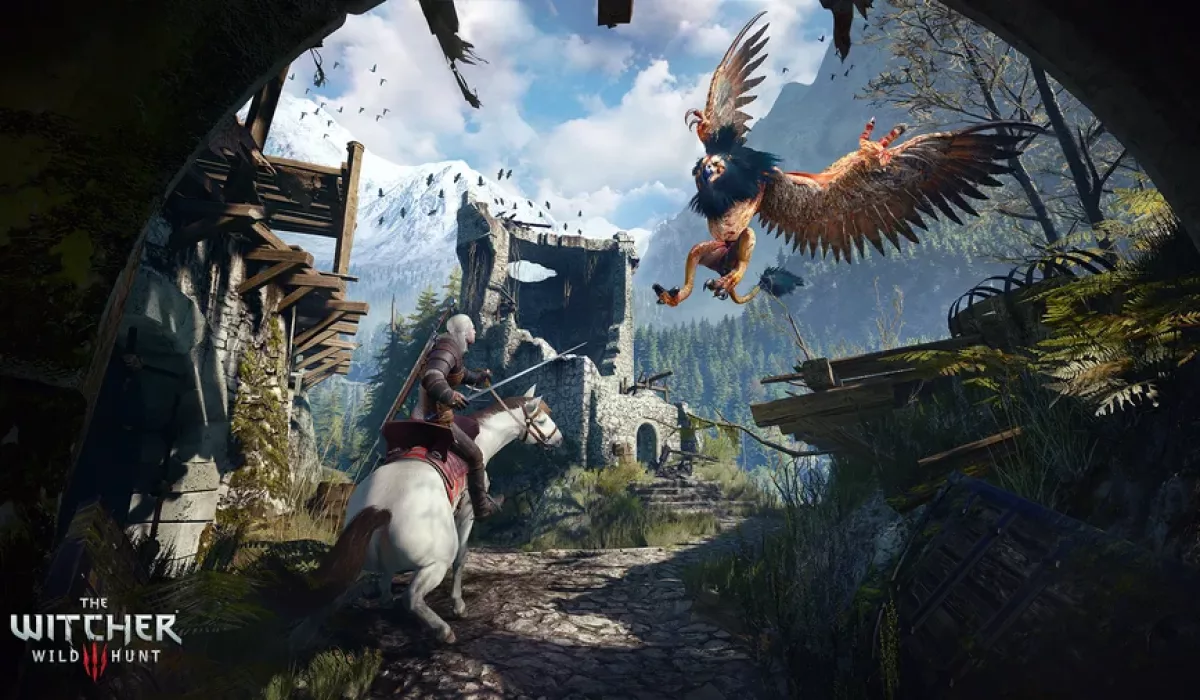
More than a decade after its release, The Witcher 3: Wild Hunt is still widely praised for something many games continue to struggle with: making its world feel genuinely alive.
Whether you're wandering through a small village in Velen or the crowded streets of Novigrad, the people around you rarely feel like simple background decorations. Villagers work, eat, sleep, seek shelter from the rain, and flee when danger appears.
According to Philipp Weber, who worked on the game's NPCs during development, creating that illusion of a living world was far more complicated than it might seem.
Players Always Look Behind the Curtain
When developers try to make an open world feel believable, players naturally start testing its limits.
They might wonder where villagers go when they leave the street, what they do during the day, where they sleep at night, or how they react when something unexpected happens.
Those seemingly simple questions became surprisingly important during the development of The Witcher 3. The developers knew that players would pay attention to small details, even when they weren't consciously looking for them.
Creating the illusion of a living world wasn't simply about filling towns with more NPCs. Their behaviour also needed to make sense.
Small Details Can Break the Illusion
One particularly memorable development story shows just how difficult that could be.
When Geralt caused trouble in a village by swinging his sword around, nearby NPCs were supposed to react by fleeing from danger. It was a perfectly reasonable reaction for characters who believed their lives were suddenly at risk.
There was just one problem.
Women carrying babies reacted in the same way, running away and accidentally dropping their children in the process.
The situation was obviously not intentional, but it highlighted an important problem with creating believable NPC behaviour: a seemingly simple reaction can have very different consequences depending on the character involved.
For a few weeks, women were reportedly dropping their babies during these situations, turning what was supposed to be a believable reaction into one of the more bizarre bugs from the game's development.
NPCs Needed to Feel Alive
Rather than making every NPC follow the exact same routine, CD Projekt Red created different points of interest throughout its environments, giving characters places where they could spend their time.
Their daily routines were carefully designed rather than being completely random. Characters could go to work, eat, sleep, react to the weather, or seek shelter when it started raining.
This attention to detail helped make towns feel less like collections of NPCs waiting for the player and more like places that continued to function on their own.
Even small changes in behaviour could make a location feel more natural and less obviously scripted.
A Lot of the Magic Came From Handcrafted Details
One of the interesting aspects of The Witcher 3's world is how much work went into making seemingly ordinary moments feel convincing.
Many of the things players see happening around them were carefully planned by the developers. NPCs don't simply wander around randomly; their movements and destinations were often designed to fit the environment around them.
That required a huge amount of manual work, especially considering the size of the game's open world.
The result is a world where small details can make a surprisingly big difference. A villager seeking shelter from the rain or a group of characters gathering at a particular location might seem insignificant on its own, but together these moments create the impression that the world exists independently of Geralt.
Modern Tools Make World-Building Easier
Building detailed environments has become faster and easier with modern development tools, but creating believable behaviour is still a major challenge.
Creating a village is one thing. Filling it with characters that behave consistently and respond appropriately to what's happening around them is another.
Technology can speed up production, but convincing NPC behaviour still requires thoughtful design, careful planning and extensive testing.
That is especially true in open-world games, where players can approach situations in ways developers may not have anticipated.
Why Players Still Remember The Witcher 3
Many modern open-world games feature enormous maps, hundreds of NPCs and countless side activities.
What makes The Witcher 3 stand out is that its world rarely feels like a collection of completely disconnected systems.
The people living in its villages aren't perfect simulations of real human beings. They don't need to be. They simply behave consistently enough for players to believe that they belong there.
That illusion is a major part of why the game continues to be regarded as one of the finest RPGs ever created.
Believable Worlds Matter More Than Bigger Worlds
As developers continue to build increasingly ambitious open worlds, The Witcher 3 remains a good reminder that scale isn't everything.
Players don't simply remember the size of a map. They remember the places that felt authentic, the characters that reacted naturally, and the small details that made a fictional world feel convincing.
Even years later, those details continue to influence how players judge modern RPGs.
The Witcher 3 didn't become memorable because every NPC was perfectly simulated. It became memorable because CD Projekt Red understood that even the smallest details could make players believe the world around them was real.
Watch The Witcher 3 Gameplay
If it's been a while since you've explored the Northern Kingdoms, the official gameplay trailer is a great reminder of why The Witcher 3: Wild Hunt remains one of gaming's most celebrated RPGs.


This YouTube video is privacy-friendly by default. YouTube content is only loaded when you press play.

Webmastahhh is the creator of Mastanet, a gaming and technology website where he shares news, reviews, guides and personal insights about games, hardware, software and the future of digital entertainment.