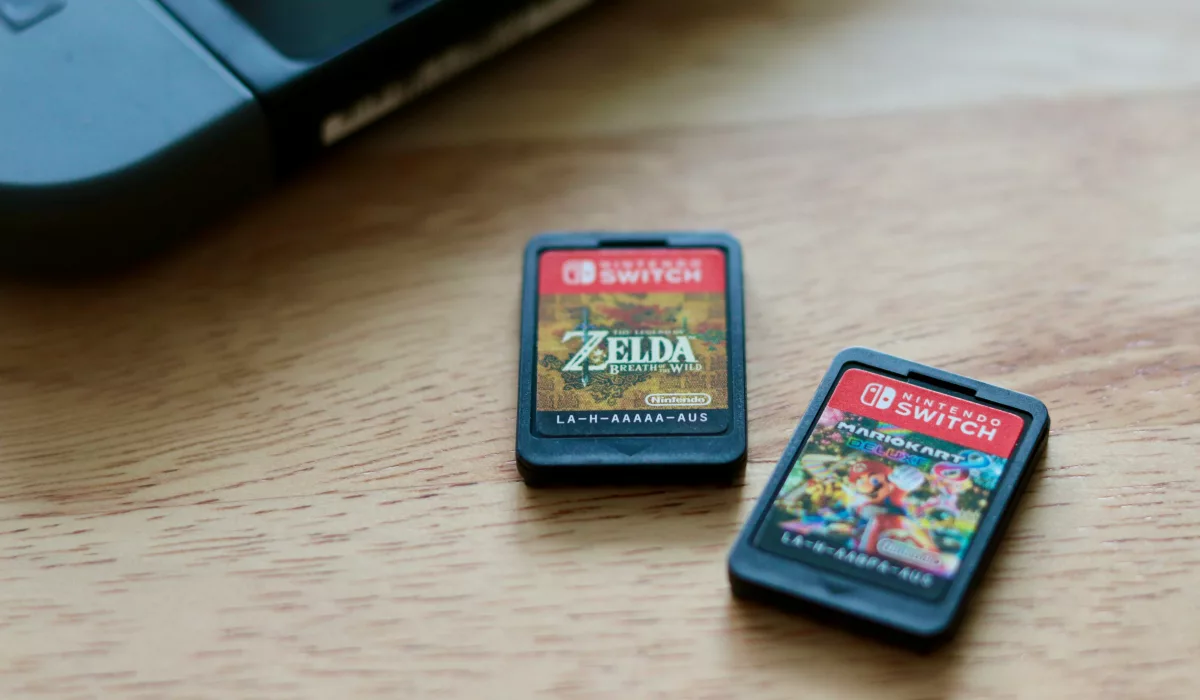


Nintendo Switch cartridges could face changes in their supply chain as Taiwanese chipmaker Macronix gradually moves away from ROM production. The company is shifting its manufacturing focus towards other types of memory, driven by growing demand from the data center industry.
Macronix, a Taiwanese semiconductor manufacturer involved in producing memory chips used in Nintendo game cartridges, is preparing to wind down its ROM business. The development follows the company's latest financial results and could raise questions about the long-term production of physical Nintendo Switch games.
The situation attracted attention after financial analyst David Gibson highlighted the company's plans on November 4, 2026. According to his findings, Macronix will no longer develop new ROM products, while the third quarter of 2026 will be its final reporting period for ROM sales as a separate business segment.
Macronix shifts production towards data center memory
The company's financial figures help explain the decision.
Macronix reported a 39% year-over-year decline in ROM revenue during the third quarter. ROM products accounted for just 5% of the company's total sales, compared with 26% during the same period last year.
Meanwhile, demand for other memory technologies has increased considerably. NOR memory revenue grew by 158%, while NAND revenue recorded an increase of 768%.
Macronix chairman Miin Wu pointed to strong demand from data center customers, who are increasingly requesting additional production capacity. With limited manufacturing resources available, the company is prioritizing memory products that offer better business opportunities.
This shift also reflects the growing demand for hardware used in data centers and AI infrastructure.
Will Nintendo Switch physical games be affected?
For Nintendo fans who prefer buying physical games, the announcement naturally raises questions about cartridge production.
Macronix has been an important supplier of memory chips for Nintendo game cards, but it is not the only manufacturer involved in the supply chain. This means the company's decision does not automatically signal an end to physical Nintendo Switch releases.
The situation is also worth examining separately for the original Nintendo Switch and Nintendo Switch 2, as their cartridge technologies and suppliers are not necessarily identical.
For now, there is no indication that Nintendo will immediately stop producing physical game cards because of Macronix's decision.
However, the broader industry is gradually moving towards digital distribution. Nintendo's own software sales figures show that digital purchases already represent a substantial part of its business.
Digital distribution continues to grow
Nintendo has previously made clear that it has no current plans to abandon physical games.
In October 2026, Bill van Zyll, Nintendo's vice president and general manager for Latin America, reiterated that the company intends to continue supporting physical releases. He also acknowledged that many players still value owning physical copies.
Nevertheless, Nintendo Switch 2 has introduced another distribution option through Game-Key Cards. These cards provide access to a digital game download rather than storing the complete game directly on the cartridge.
If physical cartridge production becomes more expensive or difficult to maintain, publishers could have additional reasons to consider alternatives such as Game-Key Cards and digital releases.
Macronix has not announced a specific date for the complete end of its ROM production. For now, the company is gradually redirecting its manufacturing capacity towards other memory technologies.
For collectors and players who prefer physical Nintendo Switch games, it is a development worth keeping an eye on.

Webmastahhh is the creator of Mastanet, a gaming and technology website where he shares news, reviews, guides and personal insights about games, hardware, software and the future of digital entertainment.